All Posts By

Kelly

Spring songs

With my elbow resting on the table, I lift my arm straight up, fingers stretching upwards. The fingers of my other hand start drumming the table, calling my daughter’s attention to my actions. Inviting her to join me as we sing.

Up the tall white candlestick climbed little Mousey Brown
(with fingers climbing the candle stick arm)
Right to the very top, but he couldn’t get down
So he called to his grandma, ‘Grandma, Grandma’
(hands held to the sides of our mouth we call)
But grandma was in town
(reaching our hands outwards)
So he curled himself into a ballĀ 
(pulling our hands together and crossed over our chests)
and roley-poleyed down
(with both hands making a roley-poley motion)
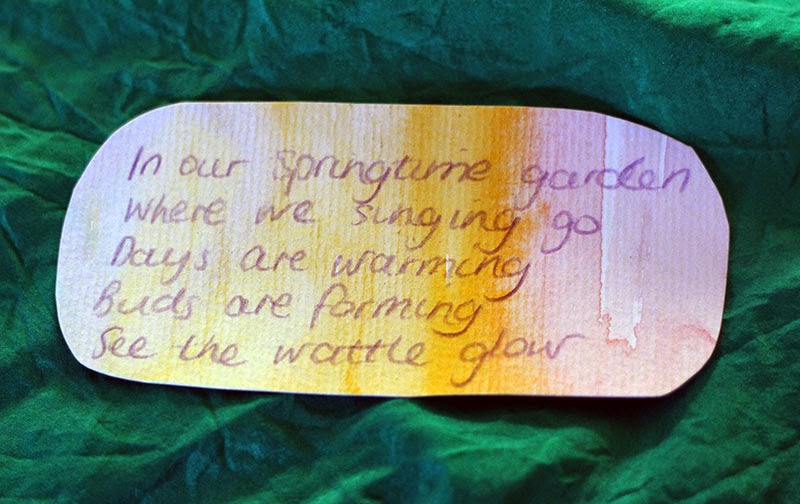
My daughter then asks that we sing another, sing another!
Again drumming our fingers on the table we sing…

Springtime showers, Springtime rain
(we use of hands to show raindrops falling)
Wash the earth all clean again
(our hands swish side to side)


Spring is coming
Spring is coming
Birdies build their nest
Weave together, straw and feather
(hands folding over each other)
Each one doing their best
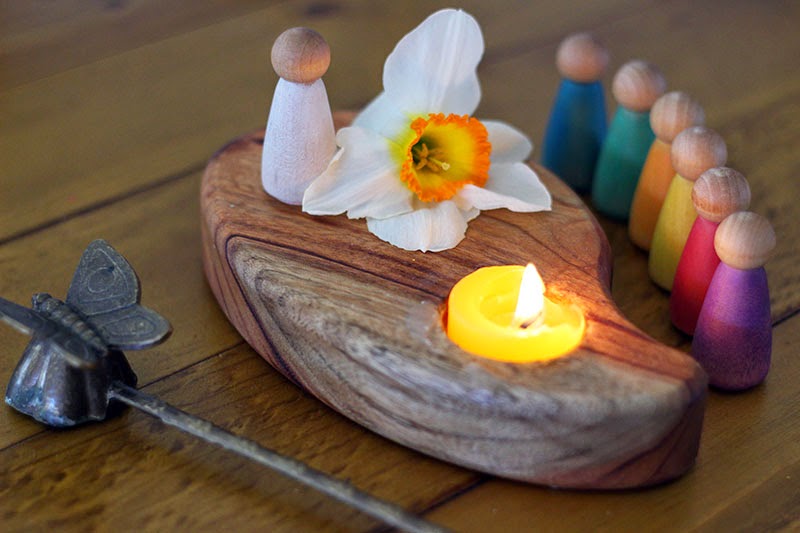
 

We sing after our lunch and before quiet time. While our mealtime candle still burns bright. We don’t sing everyday. But the days we do, I feel a greater togetherness and connection. Our songs are a celebration of the season. Bringing reverence and gentle awareness to the time of year.

Happy days,
Kelly
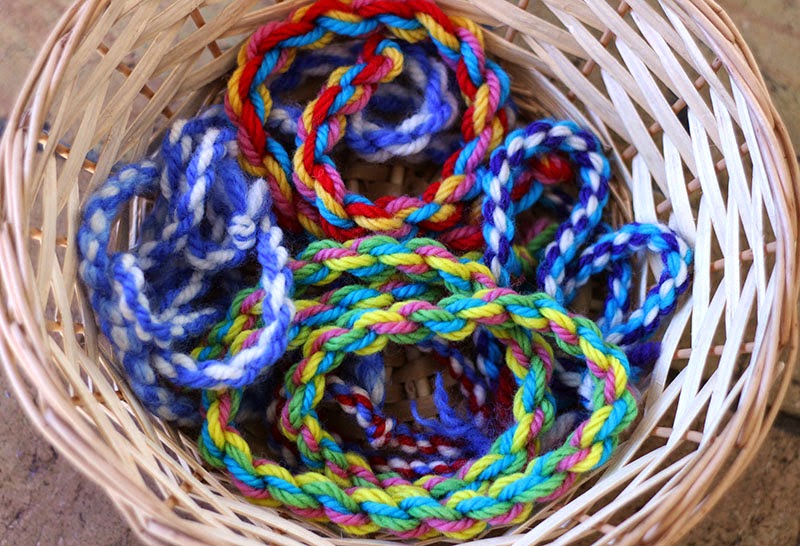
How to make a wool twistie

Making wool twisties is the first handwork project for children at our Waldorf school. A wool twistie is a simple and pretty wool rope. It is a great open ended material which can be used as horse reins, fishing line, jewellery or whatever the little ones come up with!


How to make a wool twistie

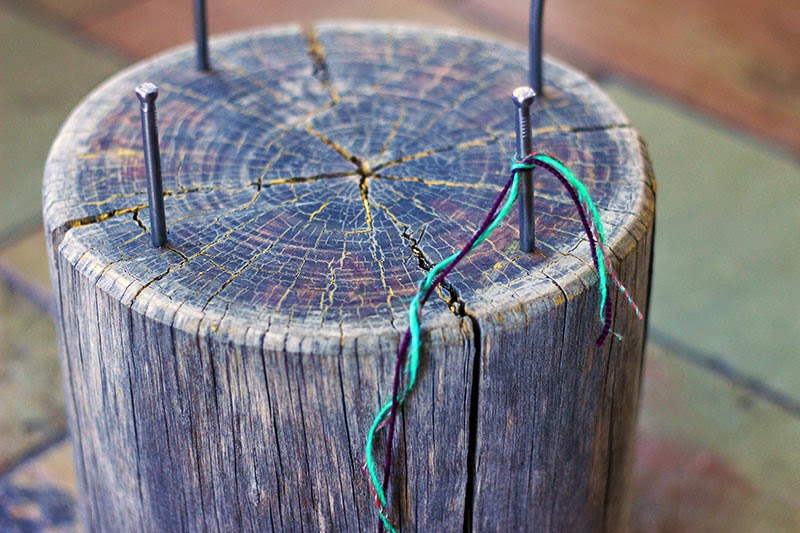
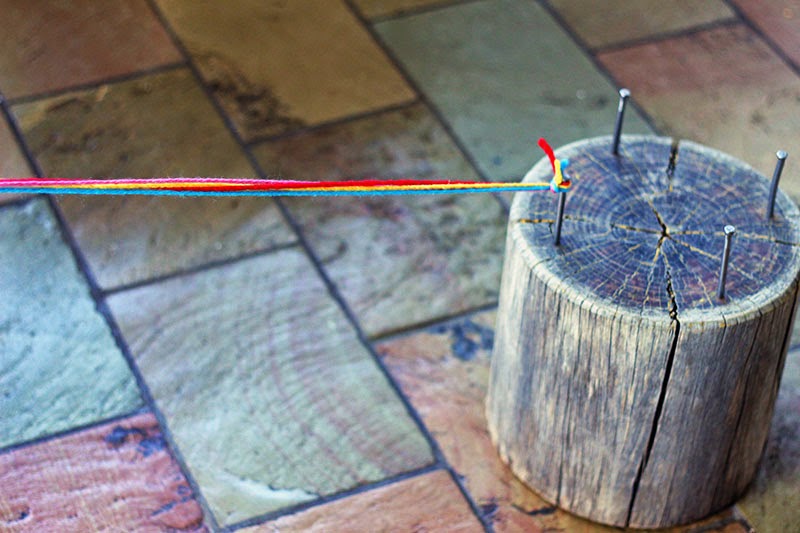
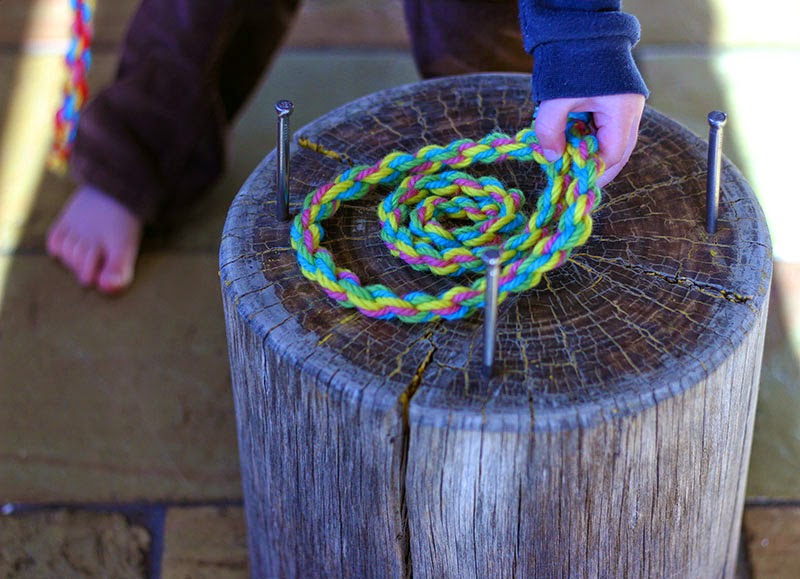
Select three or four colours of wool to cut into long pieces (around two meters). Hold the strands together and tie one end to a nail like in the photo, to a door, or even in a knot to simply hold under your foot.

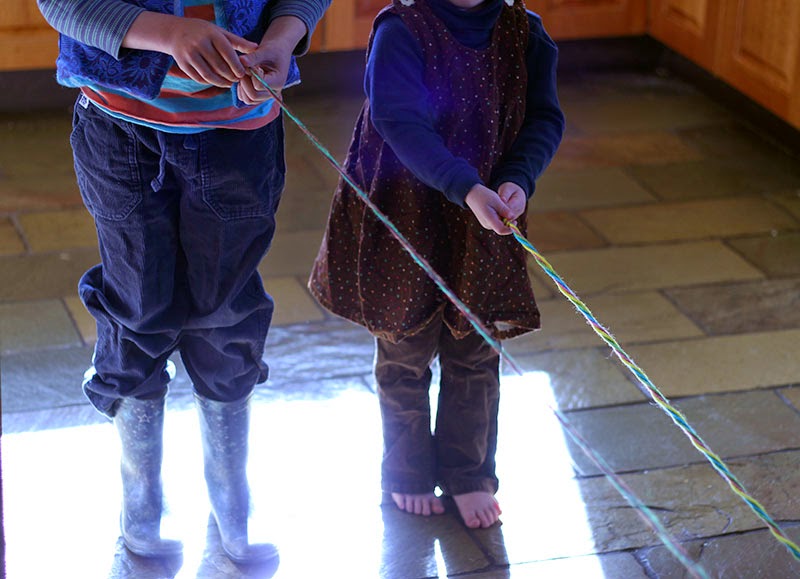
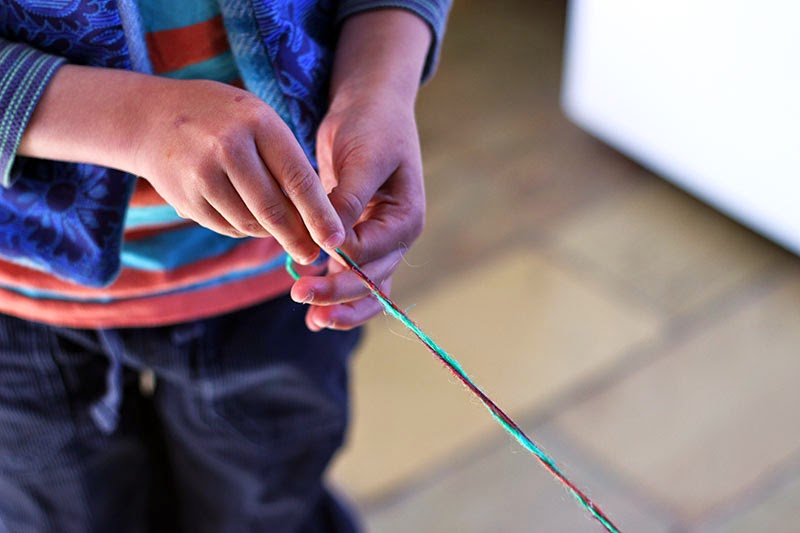
Pull the wool taut and start twisting in one direction until the twist is tight. Children and adults can easily let go as they are twisting ~ so hold on!

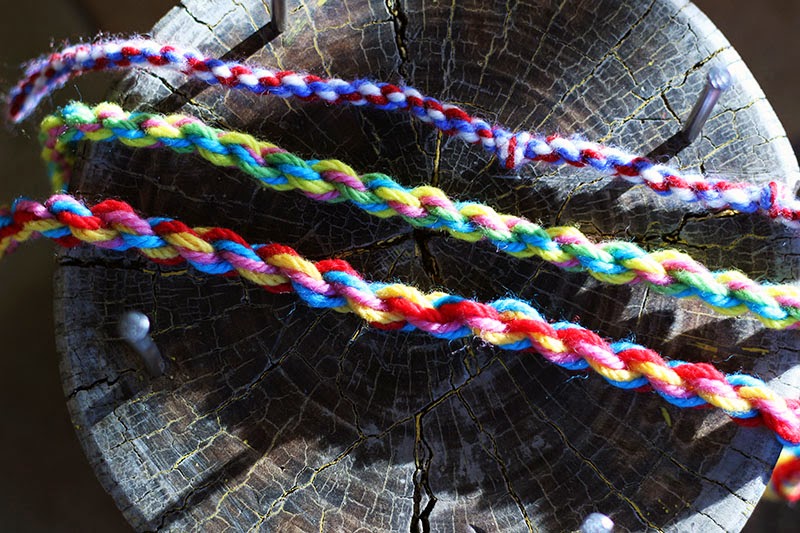
Once the twist is tight, fold the twisted wool in half to bring the two ends together ~ again don’t let go or you will need to start again. Smooth the kinks out of the wool twistie and tie the ends together. Trim off any excess. And voila ~ a wool twistie!

Why is handwork important?

Handwork is taught in Waldorf schools to develop fine motor skills {especially for pre-writing}, gain an appreciation for the handmade, as well as appreciation for beauty and creativity. Children {and adults} can learn much from handwork, including perseverance and self reliance. Using beautiful materials, some patience and creativity it is amazing what we can come up with!

I find handwork centering, an almost meditative activity. And I enjoy seeing the pride my son has in making things for himself, accomplishing these tasks and building his abilities.

Here is more information from the Waldorf Library about the important of handwork in Waldorf schools.

Happy crafting,
Kelly